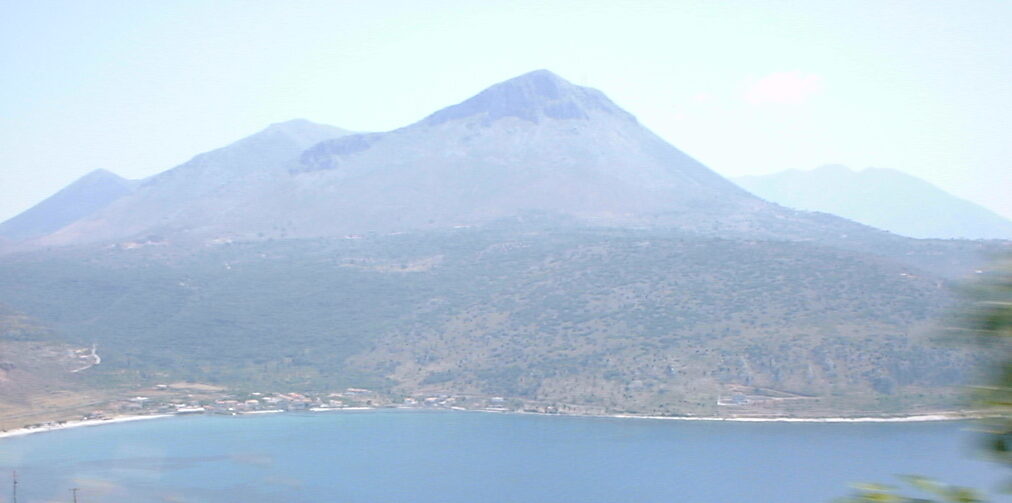
Mainland Greece is divided into several regions, each with its unique geographical features, historical significance, and cultural characteristics. Here is an overview of the major regions of mainland Greece:
Central Greece (Sterea Ellada)
- Geography: This region is located in the central part of the country, bordered by the Aegean Sea to the east and the Ionian Sea to the west.
- Key Cities: Athens, Delphi, Livadeia, Lamia.
- Description: Central Greece is historically significant, home to the capital city, Athens, which is a cradle of Western civilisation and democracy. The region also includes Delphi, an ancient religious sanctuary considered the center of the world in ancient Greek religion. The region is characterised by mountainous terrain, fertile plains, and a rugged coastline.
Thessaly
- Geography: Located in the central part of mainland Greece, bordered by Macedonia to the north and Central Greece to the south.
- Key Cities: Larissa, Volos, Trikala, Karditsa.
- Description: Thessaly is known for its vast plains, making it one of the most fertile regions in Greece, often referred to as the breadbasket of Greece. The region is also famous for the Meteora monasteries, a UNESCO World Heritage site featuring monasteries perched on top of towering rock formations. The port city of Volos serves as a gateway to the Sporades islands.
Epirus
- Geography: Located in the northwest of Greece, bordered by Albania to the north and the Ionian Sea to the west.
- Key Cities: Ioannina, Arta, Preveza, Igoumenitsa.
- Description: Epirus is a mountainous and forested region known for its rugged beauty and traditional villages. It has significant archaeological sites, such as Dodona, one of the oldest oracles in Greece. The region is also known for the Vikos Gorge, one of the deepest gorges in the world, and the picturesque town of Ioannina, which sits on the shores of Lake Pamvotida.
Macedonia
- Geography: Situated in the northern part of Greece, bordering Bulgaria and North Macedonia to the north.
- Key Cities: Thessaloniki, Kavala, Veria, Edessa.
- Description: Macedonia is the largest region in Greece, rich in history and culture. Thessaloniki, the region’s capital, is Greece’s second-largest city and a vibrant cultural hub with Byzantine, Ottoman, and Roman influences. The region is also home to Mount Olympus, the legendary abode of the Greek gods, and the ancient city of Vergina, where the tomb of Philip II of Macedon, father of Alexander the Great, was discovered.
Thrace (Thraki)
- Geography: Located in the northeastern part of Greece, bordered by Turkey to the east and Bulgaria to the north.
- Key Cities: Komotini, Alexandroupoli, Xanthi.
- Description: Thrace is a diverse and culturally rich region with a mix of Greek and Turkish influences. The region is known for its natural beauty, including the Evros Delta, a significant wetland area, and the Rhodope Mountains. Thrace has a distinct cultural identity with traditional music, dance, and festivals reflecting its multicultural heritage.
Western Greece (Dytiki Ellada)
- Geography: Located in the western part of mainland Greece, bordering the Ionian Sea.
- Key Cities: Patras, Agrinio, Messolonghi.
- Description: Western Greece is characterised by its mountainous terrain, extensive coastline, and fertile plains. Patras, the region’s largest city, is an important port and cultural centre. The region is known for the historic site of Messolonghi, famous for its role in the Greek War of Independence. Western Greece is also home to the mountainous region of Aetolia-Acarnania, known for its natural beauty and traditional villages.
Peloponnese (Peloponnesos)
- Geography: A large peninsula in southern Greece, connected to the mainland by the Isthmus of Corinth.
- Key Cities: Patras, Kalamata, Corinth, Sparta, Nafplio.
- Description: The Peloponnese is a region steeped in history, with numerous archaeological sites, such as Ancient Olympia, the birthplace of the Olympic Games, and Mycenae, a major centre of Greek civilisation. The region features a diverse landscape with mountains, valleys, and beautiful coastlines. Nafplio, the first capital of modern Greece, is a charming town known for its Venetian architecture and historic sites.
Attica (Attiki)
- Geography: A historical region that encompasses the city of Athens and its metropolitan area.
- Key Cities: Athens, Piraeus, Eleusis.
- Description: Attica is the most populous region in Greece and the political, economic, and cultural heart of the country. Athens, the capital, is renowned for its ancient landmarks such as the Acropolis, the Parthenon, and the Ancient Agora. The region also includes the port city of Piraeus, one of the largest seaports in Europe, and the historical site of Eleusis, known for the Eleusinian Mysteries, an ancient religious ceremony.
Mainland Greece is a land of diverse landscapes, rich history, and vibrant cultures. Each region offers a unique glimpse into Greece’s multifaceted identity, from the ancient ruins of Athens and the fertile plains of Thessaly to the rugged mountains of Epirus and the historical treasures of the Peloponnese. Exploring these regions reveals the depth and breadth of Greek heritage and the enduring spirit of its people.
Copyright © 2026 My Greece Blog | Powered by My Greece Blog